
research explained
Hydration and Hunger Confusion (2026W27)
How hydration status can affect hunger perception and meal timing.
May 17 · 7 min
What is healthy?
Nearly two-thirds of the calories consumed by American children come from ultra-processed foods.
It is time we understand how we got here.
Understand Real Food. Question What Became Normal. Change What We Pass Down.


64.8%
of calories consumed by children ages 6–11 come from ultra-processed foods.
0% to 80%
Change is possible. Ultra-processed food consumption among young people has declined from its recent peak. It still represents nearly two-thirds of calories.
Percent of calories, youth ages 1–18. Axis runs from 0 to 80 so the level stays visible.
Most of us are born healthy. Somewhere along the way, we become unhealthy. Then health is sold back to us.
If most people begin life healthy, what happens between childhood and adulthood?
Food. Environment. Culture. Convenience. Marketing. Habits. Access. Information. Family. Economics.
We do not have a shortage of health information. We have a problem turning information into decisions people can actually use. Vowels.org exists to keep asking those questions.
Who told us this was healthy?
Corn flakes, bacon and eggs, “low fat,” vegan labels, and protein snacks each have a history. The point is not a villain. The point is to separate what happened, what people believed, who benefited, and what the evidence says now.
About one in five U.S. children and adolescents ages 2–19 has obesity. The share is 14.9% at ages 2–5 and 22.1% at ages 6–11. These figures describe weight status. They do not prove a single cause.
14.9%
Ages 2–5
22.1%
Ages 6–11
Obesity prevalence. Bars run from 0 to 40%.
Overall ages 2–19: 21.1%, MMWR.
Out of 100 U.S. high school students, in the 7 days before the 2025 survey.
Eat fruit at least once a day
39 of 100
Eat vegetables at least once a day
63 of 100
Eat breakfast every day
27 of 100
Drink 3 or more glasses of plain water a day
58 of 100
Active for 60 minutes every day
25 of 100
This is a way of looking, not a scored contest. The numbers on a real package belong on the label. Vowels teaches people how to read them.
Breakfast A
Breakfast B
Ask of each one: Can you name the ingredients? How long does it take? What does it cost this week? What does a child learn is a normal morning?
Read a labelWe inherit more than genetics. We inherit recipes, routines, beliefs, shopping patterns, celebrations, portion expectations, and ideas about what food is supposed to look like. Inherited does not mean permanent.
Food spending, eating away from home, sweet drinks, portion sizes, and advertising moved over the same decades. Understanding why requires the whole system. Vowels will put a year on this timeline only when that year has a public source.
The conversation has changed
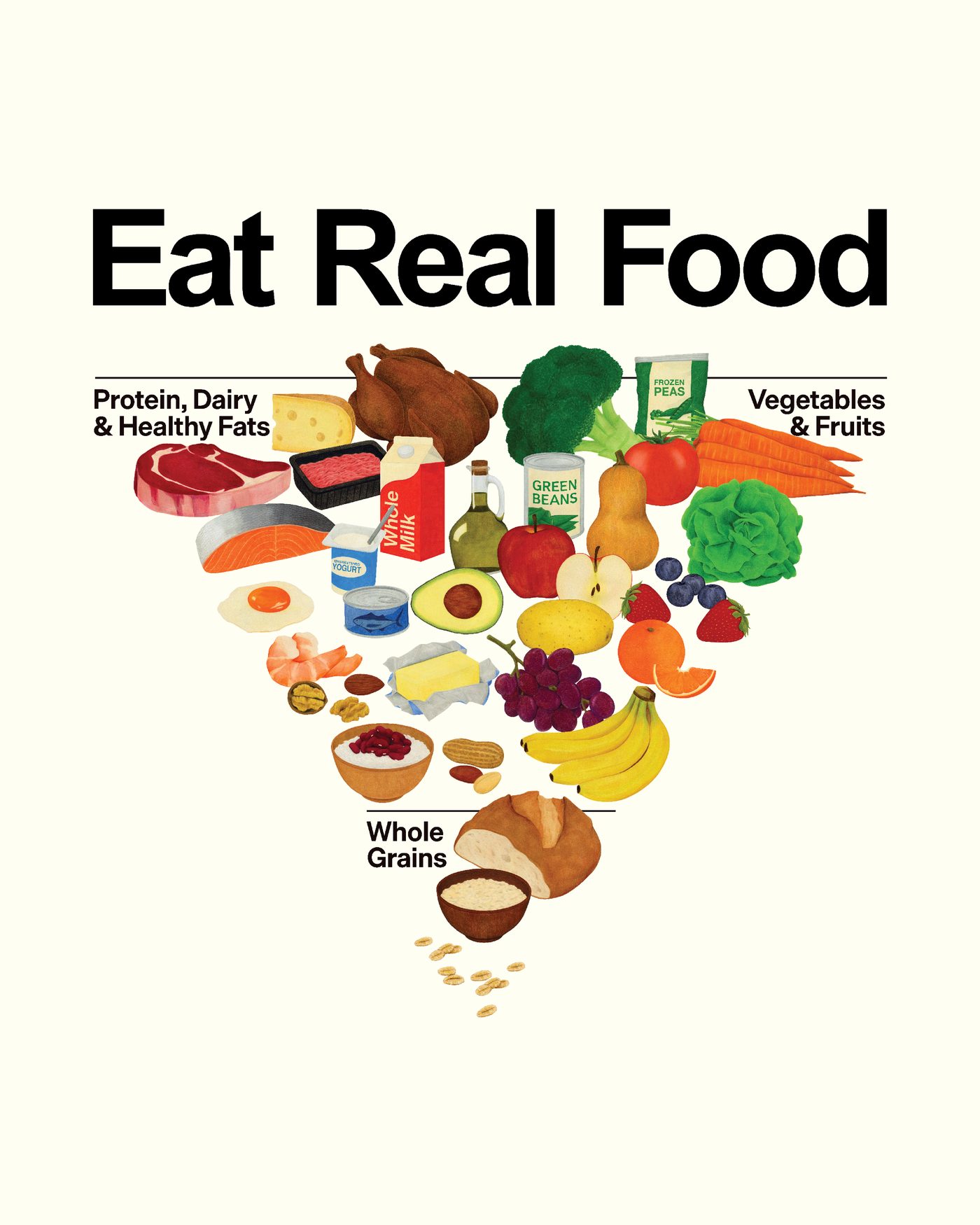
The Dietary Guidelines for Americans, 2025–2030 emphasize real, nutrient-dense foods and home-prepared meals, and tell people to avoid highly processed salty or sweet foods and sugar-sweetened beverages. The public toolkit pictures that as protein foods, dairy, vegetables, fruits, healthy fats, and whole grains. RealFood.gov describes the guidance as flexible across cultures and kitchens. Clearer guidance still has to be understood.
research explained
How hydration status can affect hunger perception and meal timing.
May 17 · 7 min

food systems
A practical framework to build healthier weeknight meals quickly.
May 17 · 7 min

from the data
Use kitchen layout and food placement to reduce default overeating triggers.
May 16 · 7 min
Newsletter
Practical nutrition notes for busy households.
Support Vowels.org
Nearly two-thirds of the calories American children consume come from ultra-processed foods. Help Vowels.org raise awareness, teach families about real food, and give the next generation the knowledge to make informed choices. The first public goal is $25,000.